
Grand Egyptian Museum Chronicle of Power and Brilliance
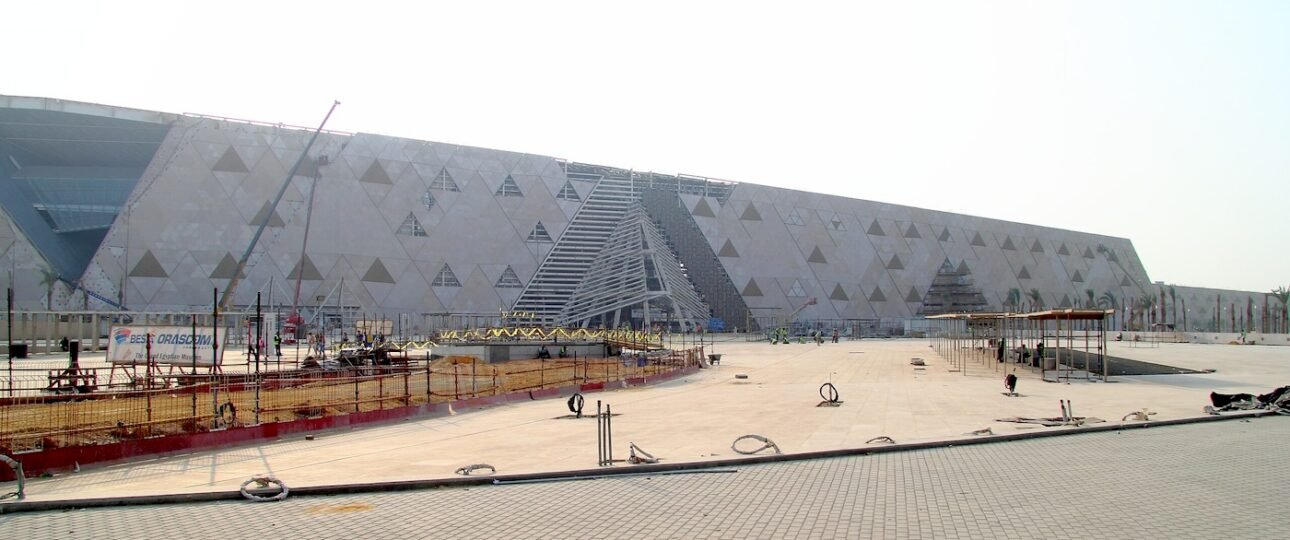
Few places on earth bring the past into the present as powerfully as the Grand Egyptian Museum. Situated just two kilometers from the Great Pyramid complex at Giza, this extraordinary site offers travelers a front-row seat to over 5,000 years of civilization. With over 100,000 artifacts, immersive exhibits, and advanced conservation facilities, the Grand Egyptian Museum is more than a museum—it is a cultural epicenter, a scientific institution, and an architectural wonder. With pyramid views on one side and state-of-the-art galleries on the other, it is fast becoming the centerpiece of Egypt’s modern tourism experience.
The World’s Largest Museum Dedicated to a Single Civilization
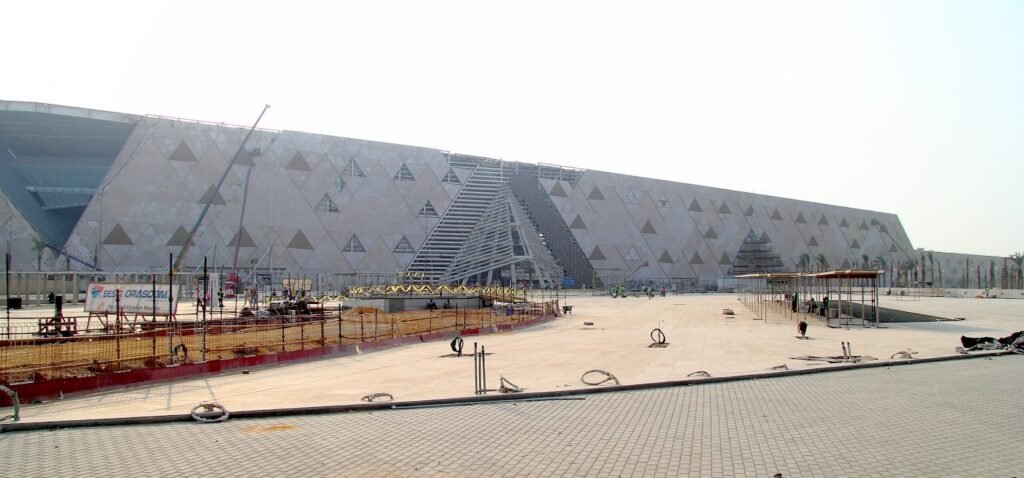
Spanning more than 480,000 square meters, the Grand Egyptian Museum is the largest archaeological museum in the world focused on a single civilization. Its location near the Giza pyramids creates a powerful visual and historical dialogue between the ancient and the modern. Designed with sleek angles, panoramic glass walls, and desert-hued materials, the building mirrors its surroundings while offering visitors an unparalleled journey through time. From Old Kingdom statues to Greco-Roman artifacts, the museum’s scale allows for a comprehensive display that no other institution has ever attempted.
Tutankhamun’s Complete Collection Together for the First Time
For the first time in history, visitors can view the entire collection of artifacts from Tutankhamun’s tomb in one place. Over 5,000 objects—many never displayed before—are now curated within immersive galleries that reconstruct the story of the boy king. From his golden funerary mask and bejeweled sandals to ornate chariots and ceremonial beds, each object helps narrate the legacy of Egypt’s most famous pharaoh. These treasures, once confined to overcrowded or fragmented displays, now breathe in spacious, dramatic rooms designed to honor their historical and emotional power.
A New Home for Iconic Artifacts
Thousands of artifacts once held in the Egyptian Museum in Tahrir Square and other institutions have been carefully relocated to the Grand Egyptian Museum. These include statues, textiles, papyri, tools, and mummies that were previously hidden in storage. Their transfer involved a monumental logistical effort, with conservationists, engineers, and transport specialists working together to ensure preservation. With these pieces now restored and showcased in controlled conditions, the museum allows for deeper storytelling and a more cohesive visitor experience.
The Grand Staircase: A Timeline in Stone
The museum’s most visually arresting feature is the Grand Staircase. Rising through the heart of the building, the staircase is flanked by a procession of massive statues, architectural fragments, and historical relics arranged in chronological order. This design leads visitors through dynasties and epochs, turning every step into a history lesson in stone. The dramatic interplay of scale and lighting here offers not only an unforgettable visual impression but also a powerful metaphor for Egypt’s enduring cultural ascent.
Advanced Restoration and Scientific Research
Behind the museum’s walls lies a suite of world-class conservation laboratories—the most advanced in the Middle East and among the finest globally. These labs support research in archaeology, materials science, DNA analysis, and restoration. Specialists from around the world work side by side with Egyptian experts to clean, analyze, and conserve delicate artifacts. This commitment to science has made the museum a global center for Egyptological research, further enhancing its reputation and influence.
The Grand Atrium and Ramses II’s Epic Welcome
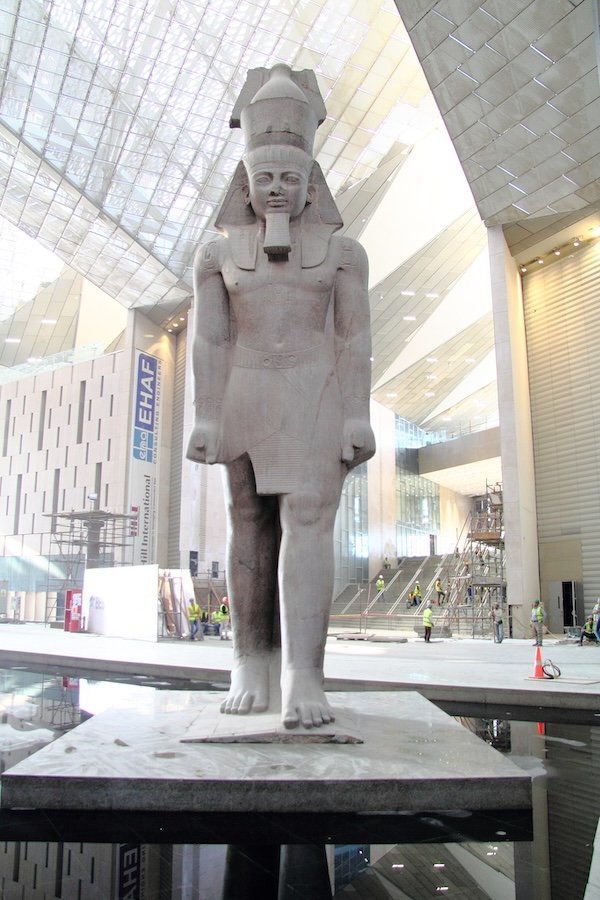
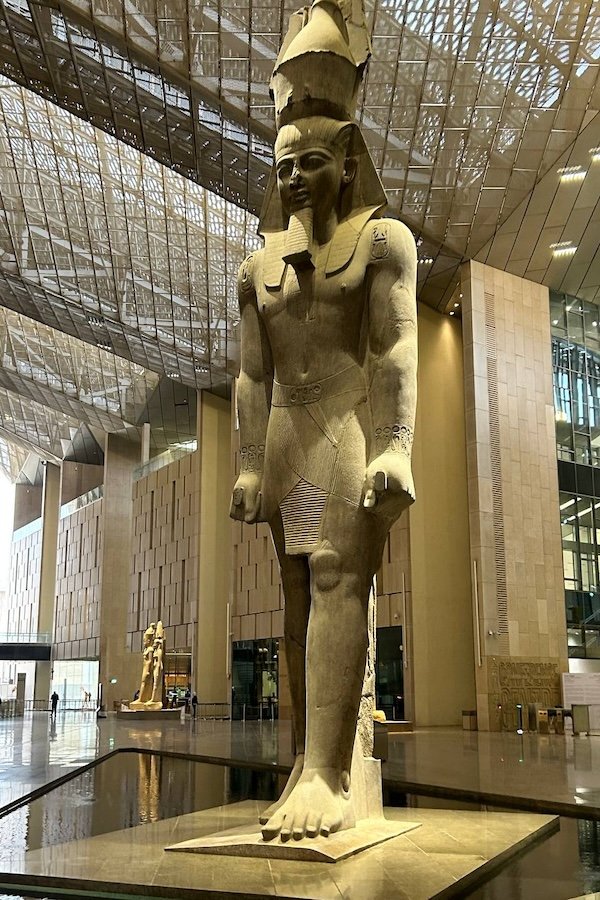
As you enter the Grand Atrium, you are greeted by one of Egypt’s most iconic rulers: Ramses II. His 80-ton statue was relocated from downtown Cairo in an extraordinary engineering feat. It now stands tall beneath a sky-lit ceiling, welcoming visitors into a space designed for awe and orientation. The atrium’s vastness and serenity offer a powerful prelude to the museum’s treasures beyond, while reflecting the grandeur of ancient temples.
Immersive Galleries That Go Beyond Pharaohs
While kings and deities take center stage, the museum delves into the everyday lives of ancient Egyptians. Thematic galleries explore ancient medicine, food, writing, fashion, music, and craftsmanship, offering a humanized view of one of history’s most sophisticated cultures. Interactive installations, reconstructed scenes, and educational programs invite visitors of all ages to connect with Egypt’s past in meaningful, memorable ways.
Blending Nature, Myth, and Modern Design
The museum’s architectural plan integrates traditional Egyptian principles with modern aesthetics. Influenced by astronomical alignments, sightlines connect the museum to the pyramids and mimic ancient cosmic order. Surrounding the complex, desert gardens and water features echo ancient Egyptian landscaping styles, providing a tranquil transition between the hustle of Cairo and the timeless aura of Giza. This combination of natural, spiritual, and structural harmony reflects both the past and Egypt’s aspirations for the future.
A Cultural Catalyst for the Future
The story of the Grand Egyptian Museum began decades ago, born from the need to preserve Egypt’s vast heritage more responsibly. Through international competitions, global partnerships, and overcoming political and logistical challenges, GEM is now a reality. Beyond a museum, it serves as a center for education, sustainability, and international cooperation. Programs for children, families, and students ensure the museum is a living space, designed to inspire generations to come.
Interesting Facts About the Grand Egyptian Museum
- The museum cost over $1 billion to build
- It can hold up to 15,000 visitors per day
- The museum’s glass facade is 800 meters long
- Over 100,000 artifacts are housed here, with 20,000 on display
- The Grand Egyptian Museum is larger than the Louvre in Paris
- Mummies are part of special exhibitions, though most are housed in the National Museum of Egyptian Civilization
Ready to see it for yourself? Join our Grand Egyptian Museum and Giza Pyramids Tour to experience the treasures of Tutankhamun, the massive statue of Ramses II, and Egypt’s incredible ancient legacy, all in one unforgettable day.
